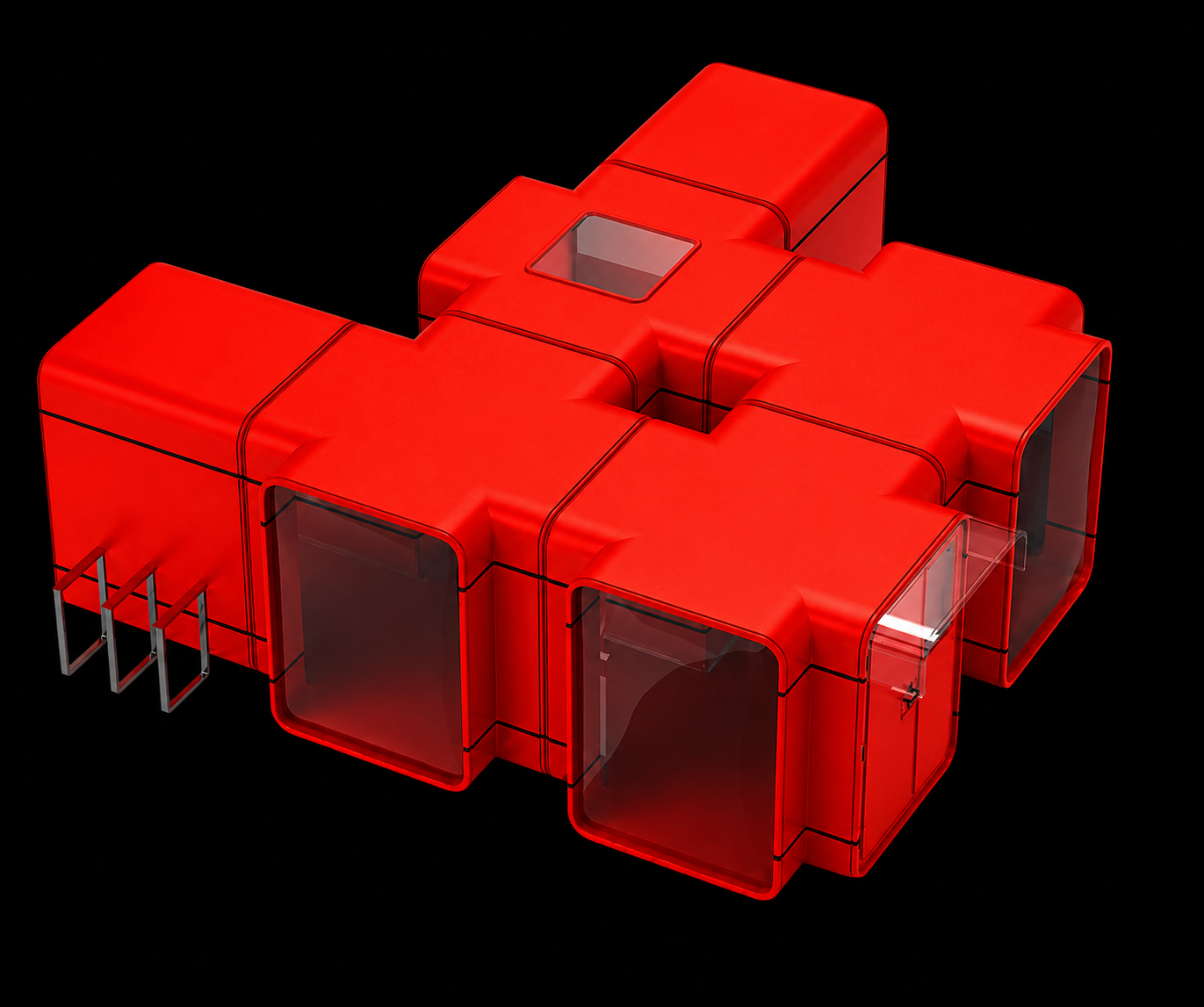
The K67 Kiosk, a Modern Design Classic.
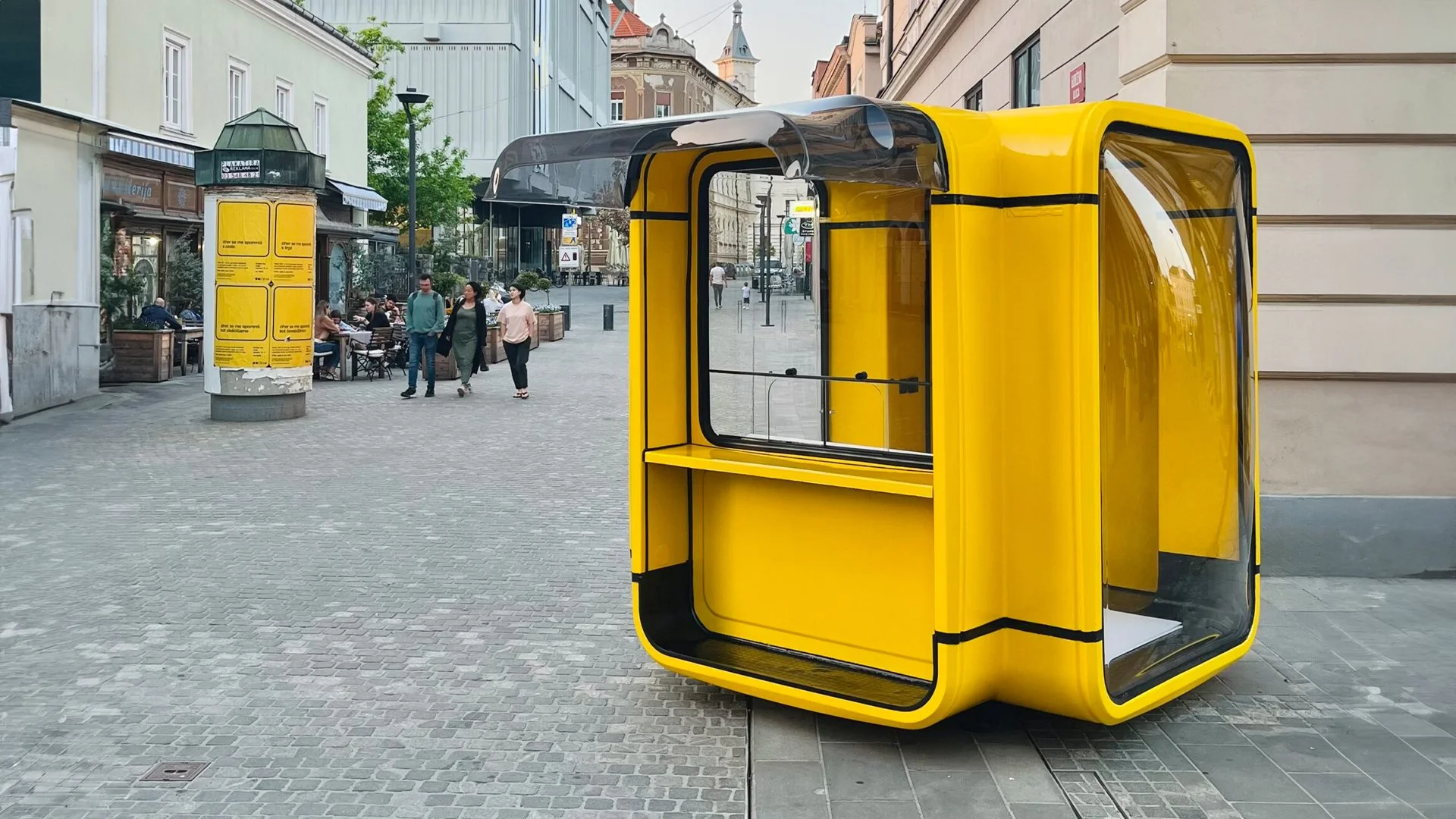
A modular architecture for micro-economies
Designed in 1966 by Saša J. Mächtig, the K67 was conceived as a meeting point where citizens and systems intersect. A modular architecture for micro-economies, civic exchange, and everyday public life.
Its lightweight, adaptable form quickly became a fixture across Eastern Europe, enabling thousands of small businesses and cultural encounters. Over 7,500 units were produced before manufacturing ceased in 1999. Today, only an unknown number remain, each one a surviving fragment of design history.
Now recognised globally as a design icon, the K67 entered the collection of Museum of Modern Art in 1971, where it remains both exhibited and in use. A rare example of design that continues to live simultaneously as art and working function.
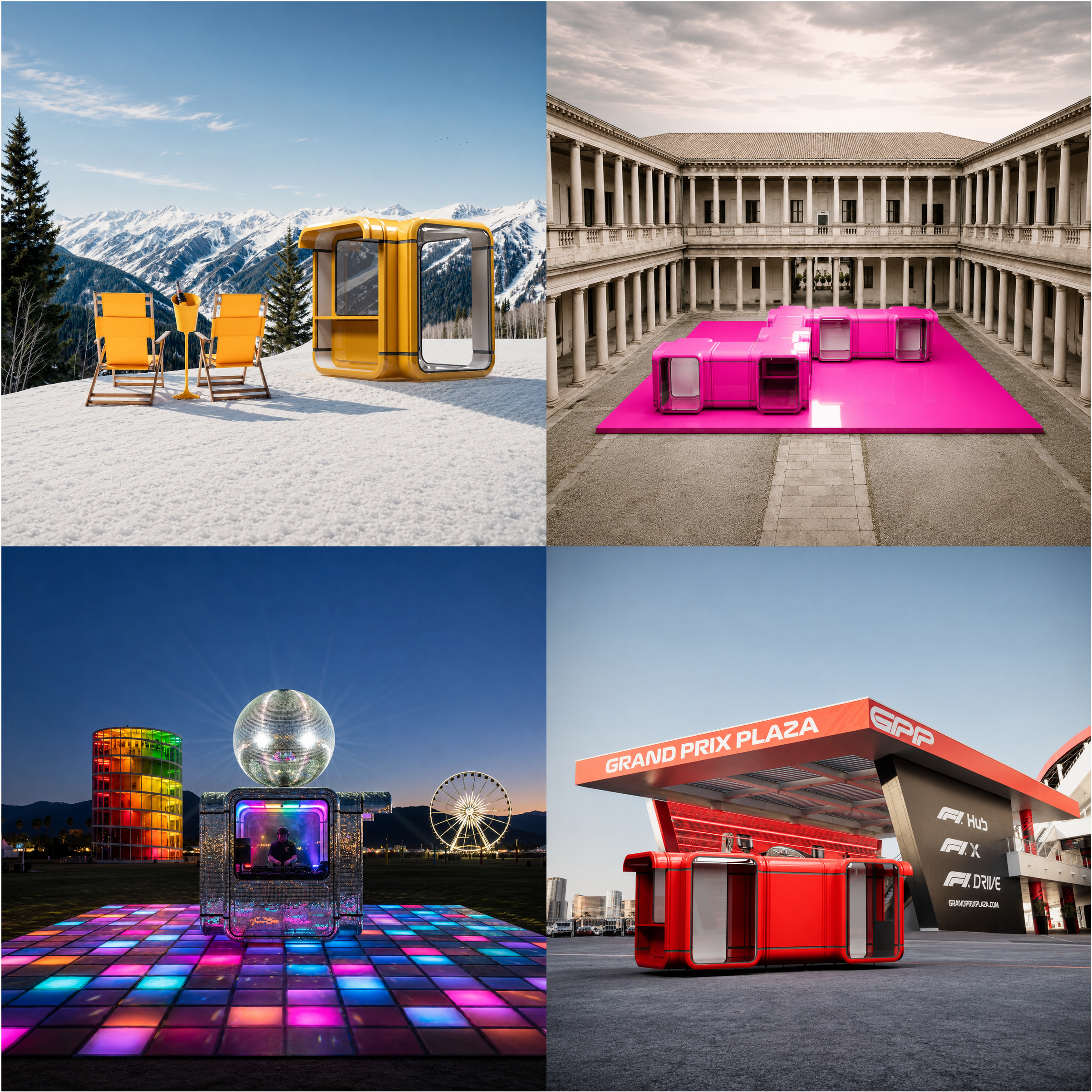
Scalable Kiosk Potential.
The K67 kiosk is naturally scalable by design and adapts to any environment to create impactful experiences.
Designed to be modular, the kiosks connect to form larger spaces that can house more immersive experiences that take guests on a journey of discovery.
Technical Specifications.
Individual kiosk key technical information.
Dimensions: 2.12m (h) x 2.29m (w) 1.98m (l)
Space: 4.5m2
Weight: ~650kg
Power: Mains powered. Heating available. Integrated sound system
WiFi: 5G router installed
Lighting: Full RGB controlled
Graphics: Exterior and interior cutter guides available for vinyl wrapping
Production: Interior fixing points for lighting and suspended production
Security: Lockable unit. WiFi connected alarm (security camera optional)